The End of an Era: Watford’s Historic Odhams Printing Site Set to Close as Media Landscape Shifts
For over a century, the skyline of Watford has been defined by the imposing presence of the Odhams printing site. Once the heart of the global publishing world, this landmark is now entering its final chapter. Following an announcement by Reach plc in February 2026, the historic operation is scheduled to cease production this year, marking a poignant transition from the age of heavy ink to the era of digital-first journalism.
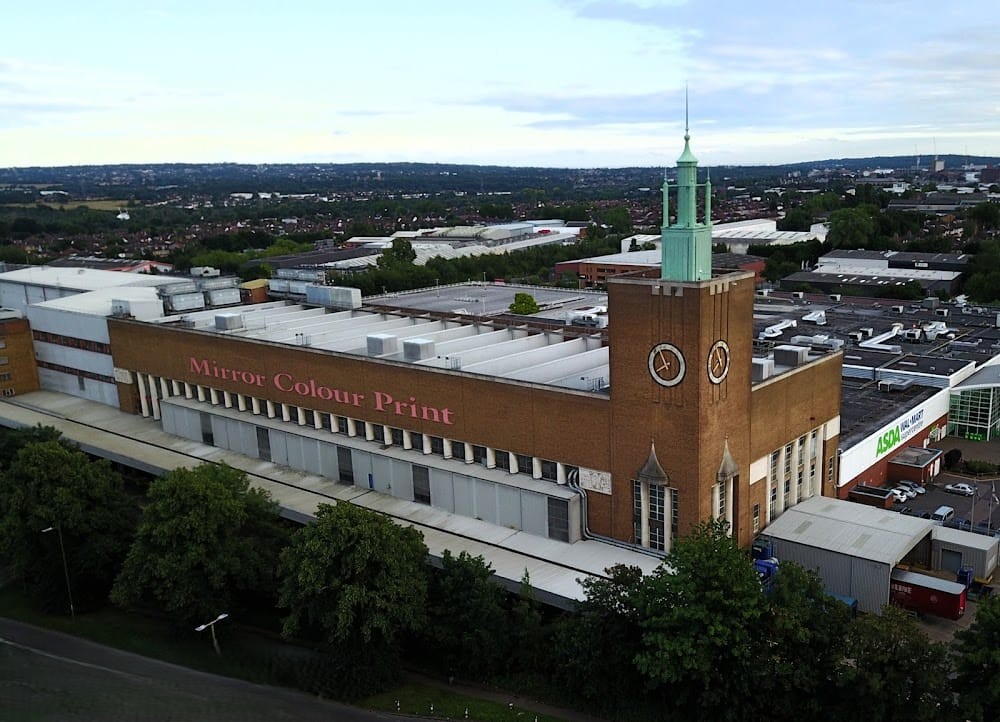
Odhams Printing Press in Watford drone footage. Once the world’s largest printing plant. (image and video copyright Watnews/Watfordmedia)
A Century of Ink and Paper
The story of the site began in 1920 when Odhams Press established what would eventually become the world’s largest printing plant. For decades, the rhythmic thrum of the presses was the heartbeat of the local economy, employing thousands of skilled workers and churning out millions of copies of iconic British titles.
From the golden age of the Daily Mirror to the high-gloss pages of OK! Magazine, the Watford facility has been the silent engine behind some of the UK’s most significant media moments.
The Shift to Broxbourne and the Digital Frontier
The decision to close the site is part of a strategic consolidation by Reach plc (formerly Trinity Mirror). In a bid to streamline operations and navigate the challenging economics of the modern media market, the company is moving its printing requirements to its site in Broxbourne.
This move follows a decade of massive consolidation within the industry, most notably the landmark 2018 deal where Trinity Mirror acquired the Express and Star titles for £200 million. As Reach plc pivots toward a digital-subscription model, the high overheads of maintaining the sprawling, historic Watford plant have become increasingly difficult to justify.
Preserving a Landmark: The Battle for Odhams Press Hall
While the machinery may be slowing down, the battle to save the building itself is heating up. Local heritage groups and the Watford Borough Council are actively working to protect the Odhams Press Hall.
Architecturally, the site is a rare example of industrial design that carries deep cultural weight. Preservationists argue that even if the printing presses fall silent, the building should be repurposed to serve the community, ensuring that its contribution to the UK’s media history isn’t erased by modern redevelopment.
“This site isn’t just a factory; it’s a monument to the workers who informed the nation for over 100 years. We owe it to Watford’s history to ensure the Press Hall remains standing.” — Local Heritage Advocate.
A Final Look from Above
As the 2026 closure date approaches, exclusive drone footage (which you can view in the video above) offers a rare perspective on the sheer scale of the facility. The sweeping aerial views capture the iconic clock tower and the expansive rooftops that once sheltered the most sophisticated printing technology on the planet.
For the residents of Watford and the veterans of the print industry, the closure is more than just a corporate relocation—it is the final page of a long and storied chapter in British industrial history.
The “Sun” Architecture: Art Deco Meets Industry
The building most people recognise today—often referred to as the Sun Printers building—is a masterclass in the Art Deco and Modernist styles that defined the 1930s.
- The Iconic Tower: The green-copper spire and the massive clock tower weren’t just for show; they were symbols of “Standard Time” and precision, essential for a business built on strict daily deadlines.
- The Press Hall: Designed to be flooded with natural light, the Press Hall featured innovative north-facing sawtooth roofs. This ensured that printers could check color accuracy under consistent lighting conditions—a massive technological leap for the time.
- A Landmark Entry: The grand entrance was designed to impress visiting dignitaries and publishers, signalling that Watford was the high-tech capital of the media world.
The Secret War Effort: Printing Maps and Propaganda
During World War II, the Odhams site became a target for the Luftwaffe due to its industrial importance. However, its role shifted from celebrity gossip to national survival.
The plant was essentially “conscripted” for the war effort. Because of its world-class photogravure capabilities, it was used to print:
- High-Precision Maps: The RAF and Allied forces relied on Odhams for detailed maps used in bombing raids and the eventual D-Day landings.
- Air-Drop Propaganda: Millions of leaflets were printed in Watford and dropped over occupied Europe to boost morale and provide instructions to resistance movements.
- The “War Illustrated”: The site continued to print vital news publications that kept the British public informed during the Blitz, often operating under blackout conditions while the sirens wailed across Hertfordshire.
A Legacy Worth Saving
The fact that the building survived the bombings of the 1940s only to face the wrecking ball in 2026 is a bitter irony for many locals. Preservationists are currently arguing that the Odhams Press Hall is not just a “shell” but a veteran of the home front and a monument to British resilience.


